Boiler in Goldsboro, NC
Boiler in Goldsboro, NC
When central heating matters to your comfort and to protecting pipes and property in Goldsboro, NC, a reliable boiler is the right solution for many homes and businesses. Whether you need a new installation, a replacement, emergency repair, or a long-term maintenance plan, a properly sized and commissioned hydronic heating system delivers quiet, even heat and greater fuel efficiency than many alternatives.
.jpg)
Common boiler types and services for Goldsboro properties
Goldsboro homes and small commercial buildings typically use one of several boiler styles. Each has service needs that affect performance and lifecycle cost.
- Gas-fired boilers (natural gas or propane): Common in town and efficient when properly vented. Modern condensing units recover heat from exhaust for higher efficiency.
- Oil-fired boilers: Found in some older or rural properties; require regular nozzle, filter, and combustion maintenance.
- Electric boilers: Compact and low-maintenance when gas or fuel access is limited.
- Combination (combi) and indirect water heaters: Provide domestic hot water plus space heating, reducing equipment footprint.
Services offered:
- Installation and full system replacement with load calculations and zoning design
- Repair and troubleshooting of leaks, pressure loss, burner faults, combustion issues, and circulator failures
- Combustion and safety inspections including carbon monoxide and draft testing
- Efficiency upgrades such as modulating burners, condensing boilers, and smart controls
- Scheduled maintenance plans for preventive servicing and priority visits
- Warranty handling and guidance on registering manufacturer warranties
Common boiler issues in Goldsboro, NC
Understanding frequent problems helps you prioritize inspections and repairs before a minor fault becomes a major failure.
- Low or fluctuating pressure: Often due to leaks, a failing auto-fill valve, or thermal expansion issues.
- Air in the system: Causes cold spots in radiators or baseboards; common where systems have been drained or when expansion tanks fail.
- Circulator pump failure: Pump noise, warm return lines, or uneven heat distribution indicate pump problems.
- Ignition or burner failures: Dirty burners, failed electrodes, or fuel supply interruptions can prevent reliable ignition.
- Sediment and scale buildup: Local water quality can contribute to scale, reducing heat transfer and efficiency over time.
- Flue or venting problems: Corrosion, blockages, or improper draft can lead to unsafe combustion and decreased performance.
In Goldsboro’s climate, occasional freezes and temperature swings increase the need to confirm system reliability before colder months. Humidity does not directly harm boilers but can accelerate corrosion in poorly maintained components.
How diagnostics and repairs are handled
A clear, step-by-step diagnostic approach identifies root causes quickly and avoids unnecessary parts replacement.
- Visual and system check: Inspect piping, visible leaks, boiler jacket, and controls for obvious issues.
- Pressure and temperature verification: Confirm static pressure, expansion tank pre-charge, and system temperatures.
- Combustion analysis: Measure flame quality, CO levels, and draft to ensure safe and efficient combustion.
- Circulator and electrical testing: Evaluate pump operation, zone valves, thermostats, and control wiring.
- Leak localization and repair: Pinpoint and repair leaks in the boiler or hydronic distribution, then refill and purge air.
Repairs focus on restoring safe operation and efficiency. Where repeated failures or age limit cost-effectiveness, replacement options are reviewed with long-term performance and warranty considerations.
Installation and replacement: what to expect
A thorough installation begins with a heat load calculation specific to your building and local conditions in Goldsboro.
- Sizing and design: Proper boiler sizing, piping layout, and zoning reduce short cycling and uneven heating.
- Equipment selection: Options include condensing boilers for high efficiency, cast-iron for durability in some applications, and condensing combi units for combined domestic hot water.
- Venting and combustion safety: Correct venting materials and clearances are essential, particularly in tight mechanical rooms.
- Commissioning: Balancing, purging, and fine-tuning controls to achieve manufacturer-rated efficiency and reliable operation.
A professionally executed replacement minimizes disruption, improves efficiency, and extends system life.
Combustion and safety inspections
Safety inspections should be part of any planned service in Goldsboro, particularly if a property uses gas or oil.
- Carbon monoxide testing at appliance and living space levels
- Flue and vent integrity checks
- Combustion efficiency and CO readings
- Safety control verification including pressure relief valves, low-water cutoffs, and limit controls
These inspections protect occupants and ensure compliance with local codes and manufacturer requirements.
Efficiency upgrades and warranty coverage
Upgrading boilers and controls can lower fuel bills and deliver better comfort.
- Condensing boilers and higher AFUE models reduce fuel use
- Outdoor reset and modulating controls smooth temperature swings and reduce cycling
- Zoning and smart thermostats improve comfort and lower wasted heat
- Properly registering equipment and following maintenance schedules preserves manufacturer warranties and extends coverage eligibility
Warranty options vary by manufacturer and model. Labor warranties and extended coverage are an important consideration when evaluating lifecycle costs.
Scheduled maintenance plans and long-term care
Regular maintenance keeps boilers running reliably and safely.
- Annual combustion and efficiency inspection
- Flushing or chemical treatment as needed to manage scale
- Checking and replacing filters, gaskets, and sacrificial anodes where applicable
- Testing safety controls and verifying pressure and expansion tank condition
- Seasonal checks to prepare for winter loads and identify wear before failure
A predictable maintenance rhythm reduces emergency repairs and keeps heating systems efficient during Goldsboro’s cooler months.
Choosing the right hydronic heating system for your property
Select a system based on building size, existing infrastructure, fuel availability, and long-term efficiency goals.
- For historic or older homes: Consider replacing aging cast-iron boilers with high-efficiency condensing models while retaining radiators if compatible.
- For new builds or major renovations: Design for zoning, modulating boilers, and integration with domestic hot water systems.
- For small commercial properties: Robust components, redundancy where needed, and smart control strategies maintain comfort and reduce downtime.
Work with a provider who performs heat-loss calculations and explains trade-offs in fuel type, efficiency, and reliability.
Benefits and practical maintenance tips
Hydronic heating offers quiet operation, even warmth, and reduced airborne dust compared to forced-air systems. To keep that advantage:
- Schedule annual inspections before the heating season
- Watch for signs of low pressure, water leaks, and strange noises
- Bleed radiators or purge zones after service that required draining
- Keep mechanical spaces ventilated and free of combustible storage
A well-maintained boiler provides dependable comfort in Goldsboro winters and protects your investment for years.
hear what our satisfied
clients have to say


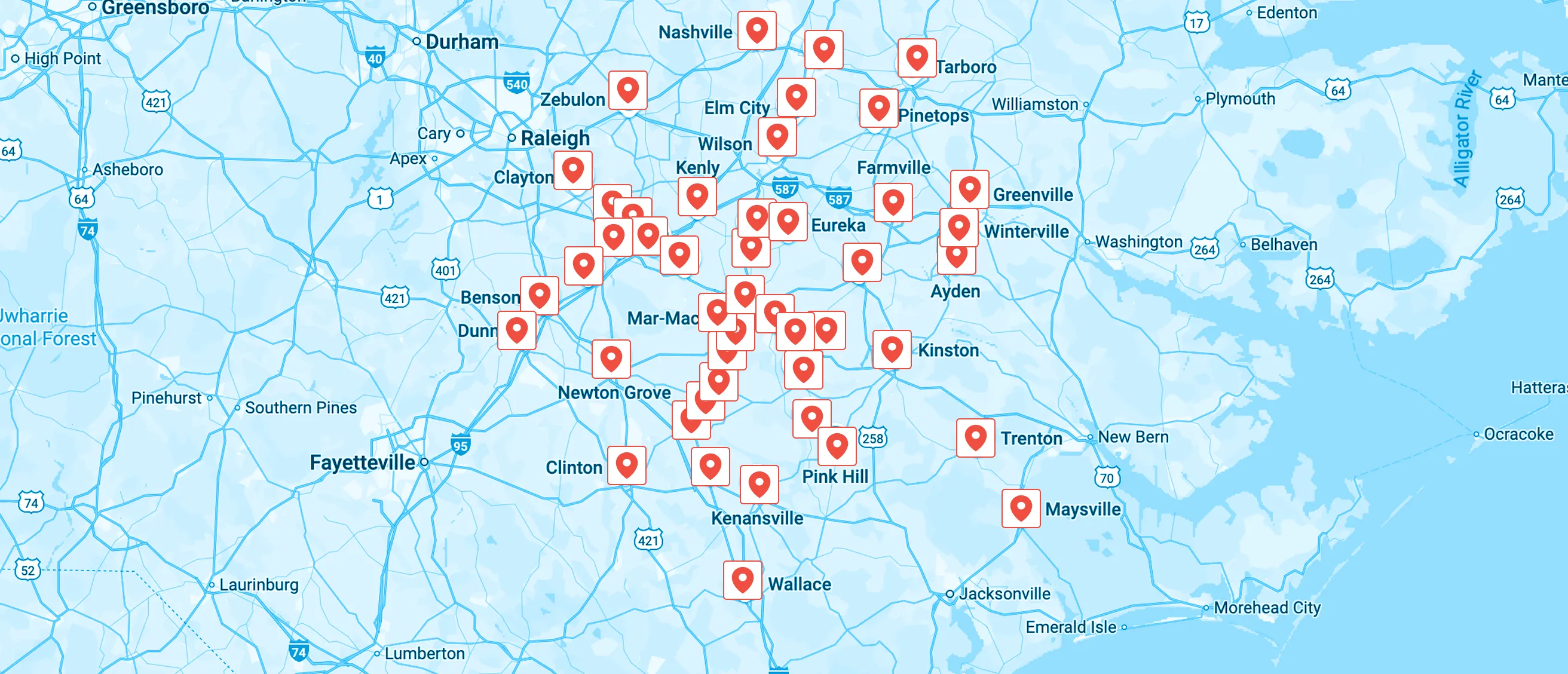
Service areas