Advanced Energy Management & Savings with Smart HVAC
Your Complete Guide to Smart HVAC and Real Energy Savings
You’ve likely noticed it. That creeping number on your monthly utility bill that seems to have a mind of its own, regardless of how often you adjust the thermostat. You're looking for ways to make your home more energy-efficient, but the advice you find is often too broad, like generic tips from government websites, or far too technical, like a manufacturer’s manual filled with acronyms.
You're stuck in the middle, knowing you need a change but unsure of the right path forward.
What if you could treat your home's energy use not as a collection of separate parts, but as a single, intelligent system? That's the promise of a smart HVAC. It’s about transforming the single largest energy consumer in your home—your heating and cooling system—into its biggest source of savings. This guide is designed to bridge that gap, moving beyond basic tips to give you a clear, honest look at how smart HVAC technology delivers real financial and environmental benefits.
What Exactly Makes an HVAC System "Smart"?
At its core, a smart HVAC system is one that automates and optimizes its performance based on your lifestyle, the environment, and even your home's energy usage patterns. It’s the difference between a simple on/off switch and a responsive system that thinks for itself.
While a traditional system relies on you to manually set a temperature, a smart system uses a network of sensors and intelligent software to make decisions that maximize comfort while minimizing waste. The key components that enable this are:
• Smart Thermostats: The brain of the operation, learning your habits and adjusting automatically.
• Geofencing: Uses your phone's location to switch to energy-saving modes when you're away.
• Advanced Scheduling: Goes beyond a simple weekday/weekend split to match your family’s unique rhythm.
• Energy Usage Analytics: Provides detailed reports showing exactly where your energy dollars are going.
• Remote Control: Allows you to adjust your system from anywhere through a smartphone app.
These features work together to create a home that isn't just comfortable, but actively works to reduce your energy consumption without you having to think about it.
The Financial Payoff: Calculating the ROI of a Smart HVAC Upgrade
The most pressing question for any homeowner is, "Is the investment worth it?" Upgrading your HVAC is a significant decision, and you need to be confident in the financial return. While every home is different, you can estimate your potential ROI by looking at a few key factors.
The U.S. Department of Energy notes that heating and cooling account for nearly half of the average home's utility bill. Smart thermostats alone can deliver savings of up to 15-20%. When you combine that with a new, high-efficiency system, the impact is substantial.
Here’s a simple framework to think about your potential return:
1. Estimate Annual Savings: Look at your energy bills for the last year. Let's say you spend $2,400 annually on heating and cooling. A conservative 20% savings from a new smart system would be $480 per year.
2. Factor in Incentives: Government and utility providers often offer tax credits and rebates for installing high-efficiency equipment. An ENERGY STAR certified system could qualify you for hundreds of dollars back. Let's say you get a $500 rebate.
3. Calculate Payback Period: If the total cost of your new system is $8,000, your effective cost after the rebate is $7,500. To find the payback period, you divide this cost by your annual savings: $7,500 / $480 = ~15.6 years.
While 15 years may seem long, this calculation doesn't include the immediate increase in home value, the prevention of costly emergency repairs on an aging unit, or the superior comfort a new system provides.
How Smart Features Translate into Direct Savings
It’s one thing to talk about savings in the abstract, but how do these specific features actually reduce your bill? Let's break it down.
Geofencing: Heating and Cooling Only When You Need It
How it works: Your smart system uses your smartphone's GPS to create a virtual boundary around your home. When you leave this area, it automatically adjusts to an energy-saving temperature. As you head home, it senses your approach and returns to your preferred comfort setting, ensuring you walk into a perfectly comfortable house without wasting a dime on heating or cooling an empty one.
Real-world example: The Brogden family leaves for a weekend trip and forgets to adjust the thermostat. With geofencing, their system automatically enters "Away" mode once they're a few miles down the road, saving energy for two full days.
Advanced Scheduling: A Thermostat That Fits Your Life
How it works: Your life isn't a simple 9-to-5. Maybe you work from home on Tuesdays, or the kids have late soccer practice on Thursdays. Advanced scheduling lets you create a detailed temperature profile that matches your family's actual schedule, day by day and hour by hour. It ensures you’re never wasting energy conditioning your home for people who aren't there.
Energy Usage Analytics: Knowledge is Power
How it works: A smart system doesn't just use energy—it tracks it. You get monthly reports that show how many hours your system ran, how your usage compares to previous months, and even how your efficiency stacks up against other smart homes in your area. This data empowers you to find new opportunities for savings and see the direct impact of your adjustments.
Decoding Efficiency Ratings: SEER, AFUE, and HSPF Explained
When you start [] exploring system replacement options, you'll encounter a trio of acronyms: SEER, AFUE, and HSPF. Understanding what they mean is crucial for making a cost-effective choice. Think of them like the MPG (miles per gallon) rating on a car—a higher number means better efficiency.
• SEER (Seasonal Energy Efficiency Ratio): This measures your air conditioner's cooling efficiency over an entire season. The current federal minimum is 14 SEER in our region, but high-efficiency models can reach 22 SEER or more. Upgrading from an old 10 SEER unit to a 16 SEER unit can cut your cooling costs by nearly 40%.
• AFUE (Annual Fuel Utilization Efficiency): This is for furnaces and boilers, measuring how much fuel is converted into usable heat. An 80% AFUE furnace means 80 cents of every dollar you spend on fuel heats your home, while 20 cents is lost. High-efficiency models reach 95% AFUE or higher.
• HSPF (Heating Seasonal Performance Factor): This rating is for heat pumps, measuring their heating efficiency. Just like with SEER, a higher HSPF number means greater efficiency and lower bills during the winter months.
As an honest and courteous company, we believe in empowering you with knowledge. During a free quote, we can show you a direct comparison of long-term operating costs between different efficiency levels, helping you find the perfect balance of upfront investment and future savings.
Maximize Your Investment with Tax Credits and Rebates
One of the most powerful tools for reducing the cost of a new HVAC system is taking advantage of available incentives. The federal government, state governments, and local utility providers frequently offer tax credits and rebates for homeowners who install high-efficiency, ENERGY STAR certified systems.
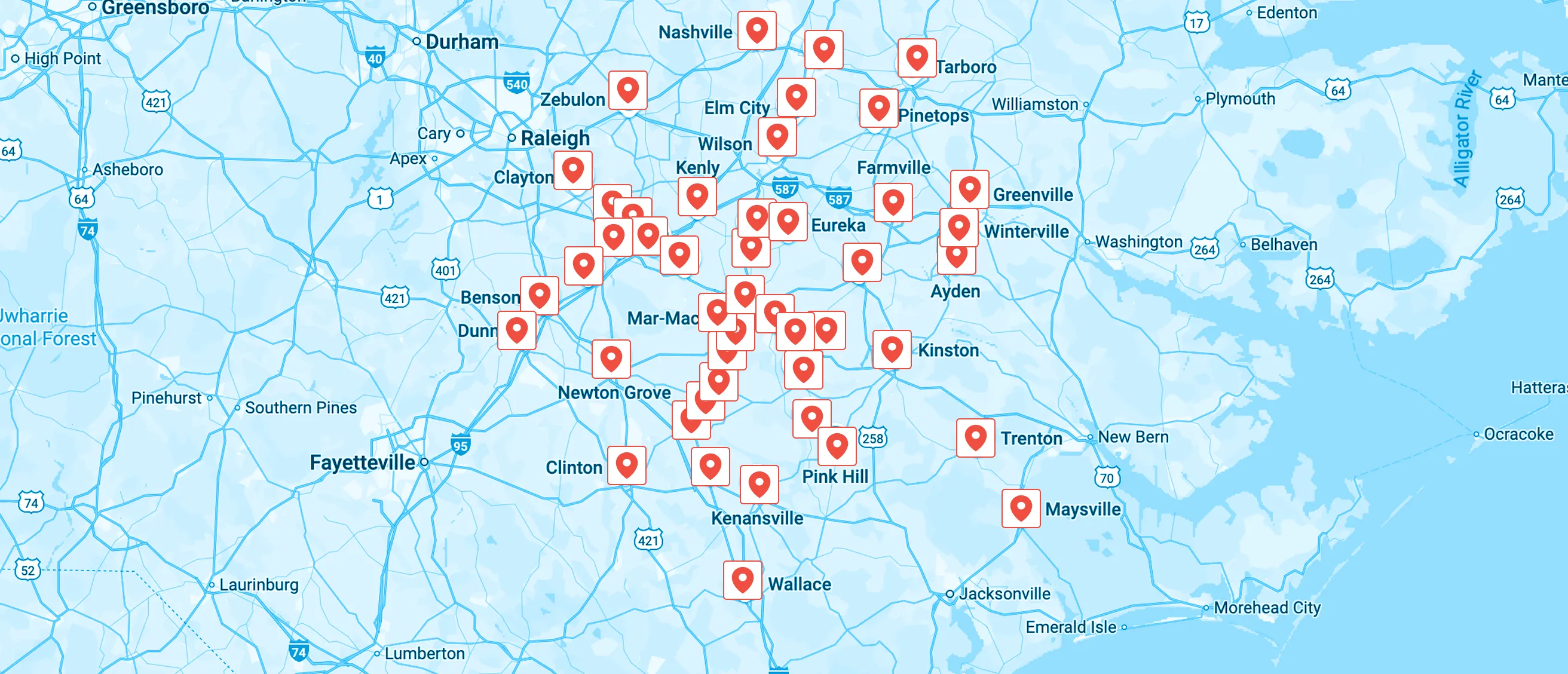
These programs can change annually, but they often represent hundreds, sometimes thousands, of dollars in savings. Navigating the paperwork and eligibility requirements can be confusing, but you don't have to do it alone. Our team at Daniels Mechanical stays up-to-date on the latest incentives available in the Goldsboro area and can help you identify every saving opportunity you qualify for.
Frequently Asked Questions About Smart HVAC
Making a major home upgrade naturally comes with questions. Here are straightforward answers to some of the most common ones we hear.
How much does a smart HVAC system actually cost?
The cost varies widely based on your home's size, the efficiency rating you choose (SEER/AFUE), and the complexity of the installation. However, the key is to look beyond the initial price tag and consider the total cost of ownership. A higher-efficiency unit may cost more upfront but can save you significantly more over its lifespan. We provide [] free quotes on system replacements to give you a clear, all-inclusive price with no surprises.
Can I make my current HVAC system "smart"?
In many cases, yes. Adding a smart thermostat is often the first step and is compatible with most modern systems. This can unlock features like scheduling and remote control. However, to get the full benefit of variable-speed technology and maximum efficiency, a fully integrated smart system is the best long-term solution.
Is it really worth the investment for an older home?
Absolutely. Older homes, particularly those with less insulation or older windows, often lose conditioned air more easily. A smart HVAC system is even more valuable in this scenario because its learning and zoning capabilities can more effectively combat these inefficiencies, leading to dramatic improvements in both comfort and energy savings.
Will I actually see the savings everyone talks about?
Yes, provided the system is sized and installed correctly. This is where professional experience is non-negotiable. A system that is too large or too small will struggle to operate efficiently, erasing any potential savings. With over 22 years of experience, Leslie Daniels and our team ensure your system is perfectly matched to your home for optimal performance.
Take Control of Your Home's Energy Future
Choosing to upgrade your HVAC system is a decision about more than just a piece of equipment. It's about investing in your family's comfort, taking control of your monthly expenses, and making a responsible choice for the environment. A smart HVAC system sits at the heart of this decision, acting as the brain of an efficient, comfortable, and cost-effective home.
The journey starts with understanding your options. If you're ready to see what a smart, energy-efficient system could do for your home, we're here to help.
Give Daniels Mechanical Services a call at (919) 922-5265 to schedule your free, no-pressure energy consultation and system replacement quote today.
-min.jpg)
hear what our satisfied
clients have to say


Service areas