Beyond the Filter Change: The Post-Repair Testing Protocol That Prevents Winter Breakdowns
The Hidden Vulnerability in Pre-Winter Heating Preparations
You hear your furnace kick on, warm air flows from the vents, and you assume you are ready for the cold weather. But looking beyond the filter change: the post-repair testing protocol that prevents winter breakdowns is the actual secret to a reliable heating system. At Daniels Heating And Air Conditioning, our team routinely sees many homeowners face sudden heating failures during the first major freeze because they relied on a simple part swap instead of comprehensive testing. The real decision point is choosing a complete post-repair stress test over a superficial fix before the deep cold arrives. Especially during a mid-fall October heating startup, identifying hidden electrical vulnerabilities is critical to ensuring your system survives the upcoming winter workload.
For dependable heating services, you need a comprehensive HVAC maintenance plan that goes beyond the basics.
Why a Simple Part Swap Leaves Your System at Risk
When a furnace component breaks down, the immediate reaction is to replace the faulty part and turn the system back on. If the heat flows, the job seems complete. However, replacing a single faulty component does not guarantee the rest of the heating system can handle a heavy, sustained winter load. A basic part swap often acts as a temporary bandage, leaving older, fatigued components to bear the brunt of the work when the temperatures drop.
The fluctuating mid-fall temperatures in Goldsboro, Mt. Olive, and Pikeville can easily mask underlying electrical vulnerabilities. During mild autumn days, your furnace only runs in short bursts. This light duty cycle does not push the HVAC system hard enough to reveal weaknesses in aging components. The system might sound fine and perform adequately when it only needs to raise the indoor temperature by a few degrees.
The danger of sudden temperature drops: When a sharp winter freeze hits the region, your furnace is suddenly forced to run continuously. Over our years serving local communities, we've found that this sudden spike in demand exposes untested electrical parts, leading to emergency failures right when you need heat the most. Professional methodology requires looking far beyond the immediate broken part to evaluate the system's overall operational health.
• Addresses only the visibly broken component. — Professional Stress Test: Evaluates the entire electrical framework under load.
• System is turned on briefly to confirm basic operation. — Professional Stress Test: System is run continuously to simulate extreme winter conditions.
• Leaves aging parts untested and vulnerable to sudden failure. — Professional Stress Test: Identifies weak links before they cause a complete breakdown.
• Provides false confidence during mild fall weather. — Professional Stress Test: Guarantees reliability during the harshest winter freezes.
Homeowners in Goldsboro NC and surrounding communities like Dudley and Princeton need to know that a heating system is a complex network of interconnected parts. A failure in one area often stresses adjacent components, which is why a holistic testing approach is absolutely necessary.
The Science of Blower Motor Amp Draws Under Load
The blower motor is the heart of your HVAC system's air distribution. Its job is to push heated air through your ductwork and into your living spaces. Because it performs heavy mechanical work, the blower motor draws a significant amount of electricity, particularly during the initial startup phase. If this motor is failing, or if a recent repair has thrown off the system's calibration, the motor becomes highly susceptible to failure under a heavy winter load.
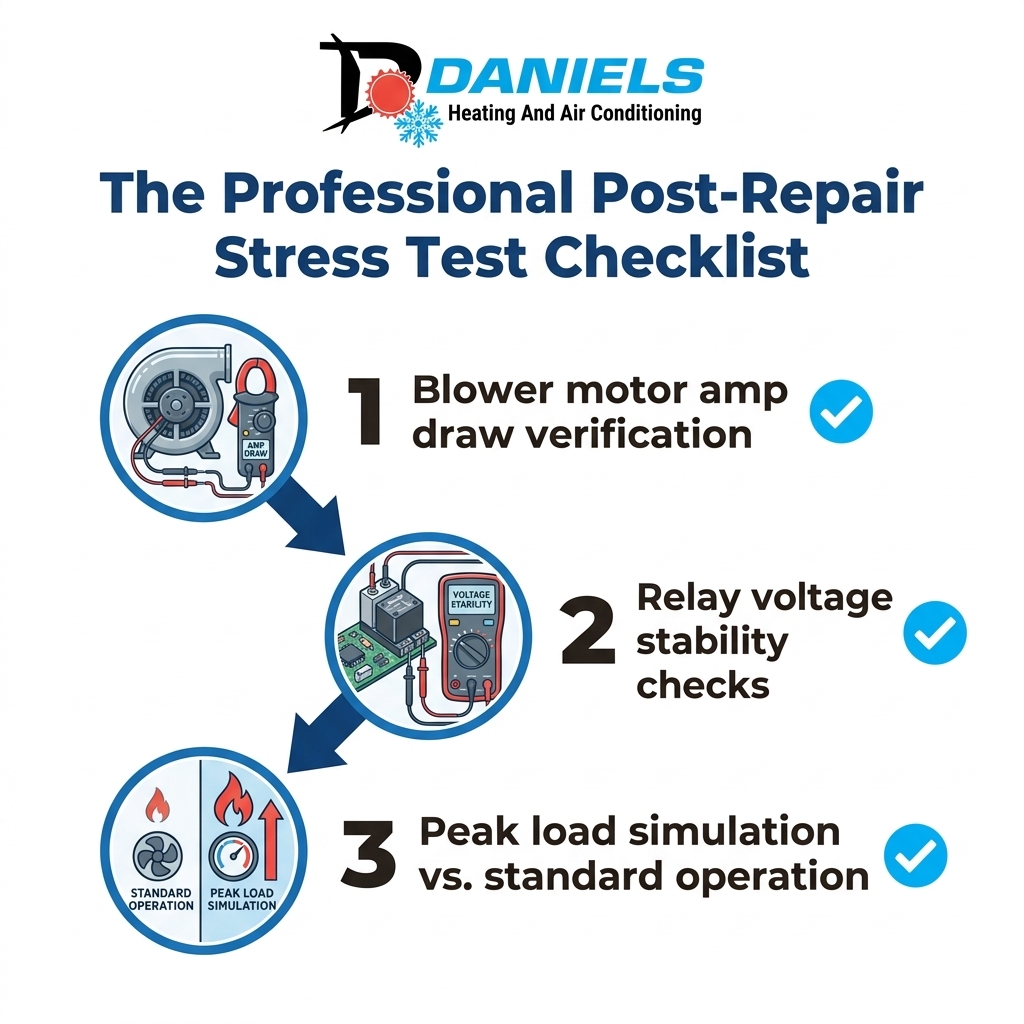
Improper calibration or underlying friction post-repair forces the motor to work harder than the manufacturer intended. Over time, this excessive strain generates excess heat, degrades the motor windings, and ultimately leads to a complete motor burnout. Professional technicians at Daniels Heating And Air Conditioning mitigate this risk by testing the blower motor amp draw and relay voltage to ensure the equipment is operating safely within manufacturer specifications.
Understanding Amperage Spikes During Startup
Every time your furnace turns on, the blower motor experiences an electrical surge known as "inrush current." This brief amperage spike is perfectly normal, as the motor requires extra power to overcome inertia and start spinning. However, if the motor is struggling due to bad bearings, restricted airflow, or electrical resistance, that amperage spike will exceed safe limits.
What our professionals look for:
• Baseline amp draw: Measuring the continuous electrical current while the motor is running normally.
• Inrush current limits: Capturing the peak amperage during startup to ensure it falls within the motor's safety rating.
• Temperature fluctuations: Checking if the motor housing is overheating due to excessive electrical resistance.
Testing these electrical parameters requires specialized meters and a deep understanding of high-voltage systems. Because of the extreme safety hazards involved, we always remind homeowners to never attempt DIY electrical testing. High-voltage furnace components carry enough current to cause severe injury, making professional diagnostic tools and training absolutely vital.
Electrical Relays: The Invisible Trigger for Sudden Winter Breakdowns
While the blower motor does the heavy lifting, electrical relays serve as the invisible brains of the operation. Relays are essentially electrically operated switches that control high-voltage components within the heating system. When your thermostat calls for heat, a low-voltage signal is sent to a relay, which then closes its internal contacts to send high-voltage power to the blower motor, the inducer motor, or the heating elements.
Over years of operation, these mechanical contacts experience significant wear and tear. Every time the relay opens and closes, a tiny electrical arc occurs. Over time, this arcing creates carbon buildup and pitting on the metal contacts. When demand is high during a freezing winter night, these worn contacts can stick together (causing the system to run continuously) or fail to close properly (preventing the system from turning on at all).
The professional testing protocol our technicians use:
• Voltage drop testing: We measure the voltage across the closed relay contacts. A significant voltage drop indicates high resistance and impending failure.
• Contact inspection: Checking for visible signs of burning, pitting, or melting on the relay housing.
• Cycle testing: Forcing the relay to open and close multiple times to ensure consistent, reliable operation.
Checking the blower motor amp draw and relay voltage is a critical step in verifying the health of the entire system. Without these tests, a newly repaired furnace might seem fine, only to leave you freezing a few weeks later. Connecting relay health directly to the reliability of your overall HVAC system repair ensures continuous winter operation without unexpected interruptions.
Simulating Peak Winter Demand During October Inspections
A true post-repair inspection involves more than just turning the thermostat up and waiting for warm air. To guarantee reliability, our professionals perform a "stress test." This involves forcing the system to operate under simulated peak load conditions, mimicking the exact strain the furnace will face during a January cold snap.
This simulation is the only way to truly verify that a mid-fall repair will hold up when the weather turns brutal. By pushing the system to its limits in a controlled environment, our technicians can spot failing components before they cause an emergency shutdown.
The steps of our professional peak-load simulation:
1. Initial baseline reading: The technician records the system's performance metrics under normal, mild conditions.
2. Extended run cycle: The thermostat is bypassed or adjusted to force the furnace into a long, continuous heating cycle, overriding the short cycles typical of a mid-fall October heating startup.
3. Load measurement: While the system is running continuously, the technician measures the electrical load on all motors, capacitors, and relays.
4. Heat rise calculation: The temperature of the air entering the return duct is compared to the air exiting the supply vents to ensure the heat exchanger is transferring thermal energy efficiently without overheating.
5. Safety control verification: Limit switches and rollout sensors are tested to ensure they will safely shut the system down if the prolonged run cycle causes unsafe internal temperatures.
Following a rigorous HVAC troubleshooting checklist ensures that no component is overlooked. Methodical testing prevents the kind of oversights that lead to weekend emergencies and uncomfortable nights.
The Professional Post-Repair Methodology That Guarantees Reliability
At Daniels Heating And Air Conditioning, we believe a repair isn't complete until the entire system passes a simulated peak winter heating demand test. This standard separates basic handiwork from true professional HVAC craftsmanship. Simply swapping a part and walking away is not enough; the surrounding electrical framework must be proven capable of handling continuous, heavy operation.
One local customer in Newton Grove recently reached out to us for a seasonal tune-up and minor repairs to get their system back in top shape. Our technician arrived, performed the tune-up, fixed a few underlying issues, and thoroughly explained the testing work involved. Because of this comprehensive approach to verifying the electrical load, their units were kept running efficiently long after the service call. This is the level of detail required to protect homeowners from the stress and discomfort of sudden winter failures.
Addressing minor repairs and performing seasonal tune-ups with a comprehensive testing protocol keeps systems in top shape for the long haul. When our technicians verify the health of your equipment in Goldsboro, Mt. Olive, and Pikeville, they are actively preventing the domino effect of component failure. A well-tested system operates smoothly, uses energy efficiently, and provides uninterrupted comfort regardless of what the winter weather brings.
Frequently Asked Questions About Post-Repair Heating Protocols
What do HVAC technicians test during a heating tune-up?
Technicians perform a variety of safety and performance checks during a tune-up. They test core electrical components by measuring amp draws, verifying voltage drops across relays, and checking the integrity of capacitors. Additionally, they inspect the heat exchanger, calibrate the thermostat, and verify that all safety limit controls are functioning properly. This comprehensive approach our team takes during a mid-fall October heating startup ensures the system is ready for winter.
Why do furnace blower motors fail in winter?
Blower motors often fail in winter due to the extreme strain of continuous operation. High amperage loads, restricted airflow from dirty filters, and a lack of pre-season calibration force the motor to work harder than intended. Over time, this excessive electrical and mechanical stress causes the motor windings to overheat and burn out.
How do you know if an HVAC repair was done correctly?
A proper repair includes testing the system under load, not just turning it on and off once. If our technician provides a detailed report showing that the repaired part and the surrounding electrical components are operating within the manufacturer's specifications, the repair was done correctly. A stress test simulating peak winter demand is the ultimate proof of a successful fix.
What causes an HVAC relay to fail in winter?
HVAC relays fail due to electrical wear and the physical degradation of their internal contacts. The constant cycling of the heating system during extreme cold causes tiny electrical arcs that pit and burn the metal contacts. Eventually, these sticking contacts will either fuse together or fail to close, resulting in a total loss of heating functionality.
Is changing my furnace filter enough to prevent a breakdown?
While changing your furnace filter is vital for maintaining proper airflow and preventing overheating, it is not enough on its own. A clean filter cannot prevent underlying electrical component failures, such as a sticking relay or a failing blower motor capacitor. Comprehensive professional testing by our team is required to catch these invisible electrical issues before they cause a breakdown.
Ensuring Uninterrupted Comfort When the First Freeze Hits
The transition from mild autumn days to freezing winter nights happens quickly. The true peace of mind that comes from knowing your heating system is ready lies in professional verification. When a Daniels Heating And Air Conditioning technician thoroughly checks your blower motor amp draw and relay voltage, they are actively removing the guesswork from your winter preparations. You no longer have to cross your fingers and hope the furnace holds up during a January blizzard.
Always ask your technicians about their post-repair testing protocols. A clear explanation of the professional stress tests—like amp draws and relay checks—separates a basic filter change from true winter heating reliability. We invite you to explore our comprehensive maintenance plans to ensure your system is rigorously tested, fully verified, and truly ready to provide uninterrupted comfort when the first freeze hits.

hear what our satisfied
clients have to say


Service areas