Immediate Troubleshooting & First Aid for Common HVAC Emergencies
HVAC Not Working? Your First-Aid Checklist Before Calling for Help
There’s nothing more frustrating than your home’s comfort system failing when you need it most. A sweltering summer afternoon with an AC blowing warm air, or a frigid winter night with a furnace that won’t kick on—it’s a situation that sends a shiver of stress down your spine. Your first thought might be the potential cost of a service call.
But before you pick up the phone, take a deep breath. Our research into common HVAC issues shows that a surprising number of problems stem from simple, overlooked causes that many homeowners can safely identify and fix themselves. Major brands like Carrier and Bryant have built entire guides around this because the most frequent failure points are often related to your thermostat, air filter, or circuit breaker.
This guide is designed to empower you. We’ll walk you through a professional troubleshooting process, from the easiest checks to the slightly more involved steps, using the same logic our technicians apply. Think of this as HVAC first aid—a way to restore comfort quickly or, at the very least, confidently diagnose the problem before you decide on the next step.
The "Big Three" Quick Checks for Any HVAC Problem
Whether it’s your heater or your air conditioner on the fritz, these three universal checkpoints solve the majority of service calls we receive. Start here before digging any deeper.
1. Check Your Thermostat Settings
It sounds almost too simple, but it happens all the time. A wrong setting on the thermostat is a common culprit. Before you assume the worst, verify these two things:
• Is it set to the right mode? Make sure the system is set to “Cool” for air conditioning or “Heat” for your furnace. Setting it to “Fan” will only circulate air without changing the temperature.
• Is the temperature set correctly? For cooling, the set temperature must be lower than the current room temperature. For heating, it must be set higher. Try adjusting it by five degrees in the desired direction and wait a few minutes to see if the system kicks on.
2. Inspect Your Air Filter
Your HVAC system needs to breathe. A clogged air filter is like trying to run a marathon while breathing through a straw—it suffocates the system, leading to poor performance and even complete shutdowns.
A dirty filter restricts airflow, which can cause your AC’s evaporator coils to freeze over or your furnace’s heat exchanger to overheat and trip a safety switch.
How to check: Locate the filter slot on your indoor unit. Slide the filter out and hold it up to a light. If you can’t see light through it, it’s long past time for a change.
[A person is shown holding up a dirty HVAC air filter next to a new, clean one for comparison.]
A clean filter is your first line of defense against system failure and is critical for both efficiency and your home's air quality.
3. Reset the Circuit Breaker
Modern HVAC systems have dedicated circuits to handle their high power demands. Sometimes, a momentary power surge or an overloaded circuit can cause the breaker to trip, cutting power to your unit as a safety measure.
How to check:
1. Find your home’s main electrical panel.
2. Look for the breaker labeled "HVAC," "Furnace," "Air Cond," or something similar. There might be two—one for the indoor unit and one for the outdoor unit.
3. If a breaker is in the middle or "Off" position, flip it completely to "Off" and then back to "On."
[A close-up shot of a home's circuit breaker panel, with one breaker clearly switched to the 'off' position.]
If the breaker trips again immediately, do not reset it. This indicates a more serious electrical issue that requires professional attention.
Diagnosing Specific Symptoms: A Deeper Dive
If the "Big Three" didn't solve your problem, let's look at some specific symptoms. This user-friendly approach helps narrow down the cause, similar to how competitors like Aireserv structure their advice, but with more context.
Your AC is Blowing Warm Air
After confirming your thermostat is set correctly and the filter is clean, warm air often points to a problem with the outdoor unit (the condenser). This unit is responsible for releasing the heat collected from inside your home.
Go outside and take a look. Does it look like this?
[An outdoor air conditioning unit with visible debris like leaves and twigs clogging the fins.]
The metal fins on the condenser need to be clear to work effectively. If they're covered in dirt, grass clippings, or leaves, the heat exchange process fails.
What you can do (safely):
1. Turn off the power to the outdoor unit via the circuit breaker.
2. Use a garden hose on a gentle setting to spray down the fins and wash away the debris. Do not use a high-pressure nozzle, as it can bend the delicate fins.
3. Allow the unit to dry completely before restoring power.
Your Furnace Won't Turn On
During the winter, a silent furnace is a major concern. If the thermostat and breaker are fine, a few other safety mechanisms could be the culprit:
• Check the Gas Valve: Ensure the gas valve leading to your furnace is in the "On" position.
• Check the Drain Pan: High-efficiency furnaces produce condensation. If the condensate drain line is clogged, water will back up into a safety pan and trip a switch that shuts the system off to prevent water damage. Check for standing water in the pan near your indoor unit.
Your System is Making Strange Noises
Unusual noises are your system’s way of crying for help.
• Squealing or Screeching: This often points to a problem with a belt or the motor bearings.
• Banging or Clanking: This could indicate a loose or broken part, such as a fan blade or connecting rod.
• Persistent Clicking: While some clicking is normal during startup and shutdown, constant clicking could signal an electrical control failure.
These mechanical issues are beyond the scope of DIY and should be addressed immediately to prevent a small problem from turning into a catastrophic failure.
Knowing Your Limits: When to Call a Professional
This guide is meant to help you resolve common, simple issues. However, many HVAC problems are complex, dangerous, or require specialized tools. You should stop troubleshooting and call for professional service appointments if you encounter any of the following:
• The circuit breaker trips repeatedly.
• You see ice or frost anywhere on the system (a sign of a refrigerant issue).
• You smell burning plastic or ozone near your units.
• You hear loud, mechanical noises like grinding or banging.
• Your system is more than 15 years old and experiencing frequent issues.
An aging system that constantly breaks down may be signaling that it's reaching the end of its life. Continuing to repair an inefficient unit can be more expensive in the long run than investing in a modern, reliable one. We provide honest advice and free quotes on high-efficiency system replacements to help you make an informed financial decision.
FAQ: Your Top HVAC Troubleshooting Questions Answered
How often should I really change my air filter?
For standard 1-inch filters, we recommend every 1-3 months. If you have pets, allergies, or live in a dusty area, check it monthly. A clean filter is the cheapest insurance for your HVAC system.
Is it okay to keep resetting my breaker if it keeps tripping?
No. A breaker is a safety device. If it trips more than once, it's signaling an underlying electrical problem that could be a fire hazard. Do not continue to reset it; call a professional immediately.
What's a sign I need a new HVAC system instead of another repair?
Consider a replacement if your system is over 15 years old, your energy bills have been steadily climbing, it uses outdated R-22 refrigerant (which is being phased out), or your repair costs are approaching 50% of the value of a new system.
How can I prevent these problems in the future?
The single best way to avoid unexpected breakdowns is with proactive care. Regular professional tune-ups catch small issues before they become major emergencies, ensure your system runs efficiently, and extend its lifespan. Inquire about our preventative maintenance plans to keep your system in peak condition year-round.
Your Partner in Home Comfort
Navigating an HVAC issue can be stressful, but being informed is the first step toward a solution. By running through this checklist, you can handle the simple fixes and have a much clearer understanding of the problem if you do need to call for help.
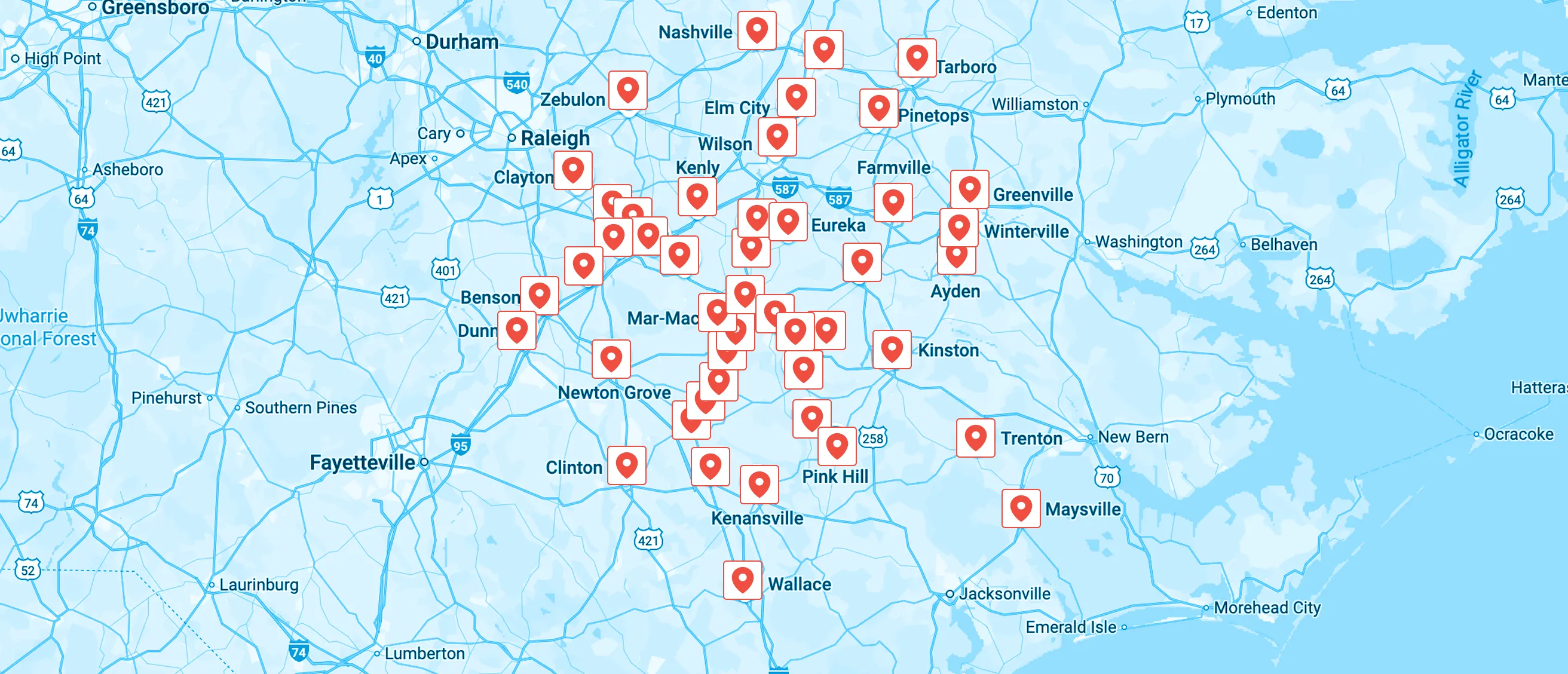
If you’ve gone through these steps and your system still isn’t working, don't worry. The team at Daniels Mechanical Services is here for you. As a family-owned business with over 22 years of experience serving the Goldsboro community, we pride ourselves on honest, courteous service. Call us at (919) 922-5265 and let our family help yours.
.jpg)
hear what our satisfied
clients have to say


Service areas