Transitioning Farmhill Homes to Fall Heating: Why We Check Reversing Valves First
The September Surprise: When Farmhill Heat Pumps Blow Cold Air
Your thermostat is set to 70°F on a crisp early autumn morning, but the vents are stubbornly blowing cold air right into your living room. You tap the screen, check the settings, and wonder if the thermostat is broken. In our years of keeping Goldsboro and Farmhill families comfortable, we've learned that transitioning Farmhill homes to fall heating: why we check reversing valves first is a matter of understanding local climate stress. After months of running exclusively in air conditioning mode, your heat pump is suddenly being asked to reverse its entire operation. That sudden demand often exposes a mechanical hesitation that has nothing to do with your thermostat and everything to do with a small, critical component located inside your outdoor unit.
If you are tired of waking up to a chilly house and need reliable solutions, exploring professional heating services is the best way to restore your home's comfort quickly and safely.
How Eastern North Carolina's Climate Stresses Your HVAC System
Unlike regions that experience a slow, linear drop in temperature as winter approaches, our team at Daniels Heating And Air Conditioning sees firsthand how Eastern North Carolina demands a lot from residential HVAC systems. The primary culprit for early-season breakdowns is the rapid September morning-to-afternoon temperature swings. These daily fluctuations force your equipment to perform double duty in a way that northern or southern extremes rarely require.
The 50-Degree Morning Demand
Before the sun comes up, local temperatures can easily dip into the low 50s. Your home loses the heat it retained overnight, prompting the thermostat to call for heating. To deliver that warm air, the heat pump must energize a specific valve to reverse the flow of refrigerant, pulling ambient heat from the cool outdoor air and compressing it to warm your living space. The system works hard to overcome the morning chill, operating under high pressure to bring the indoor temperature up to a comfortable baseline.
The 80-Degree Afternoon Shift
By 3:00 PM, the same September morning-to-afternoon temperature swings can push the outdoor thermometer past 80°F. Now, the house is too warm, and the thermostat calls for cooling. The heat pump must instantly drop the heating process, shift its internal mechanisms back to their summer positions, and begin extracting heat from inside the house to dump it outdoors.
This extreme daily cycling forces the system to switch modes continuously. The mechanical components expand during the heat of the day and contract in the cool mornings. If your system is struggling to keep up with these rapid shifts, scheduling specialized heat pump service and repair is critical to prevent a complete breakdown.
• Linear (Northern) — Fall Transition Pattern: Gradual, consistent cooling over weeks. — Impact on Heat Pump Components: Low stress. Switches to heating mode and stays there for the season.
• Static (Deep South) — Fall Transition Pattern: Remains warm well into late autumn. — Impact on Heat Pump Components: Low stress. Continues running standard cooling cycles.
• Volatile (Eastern NC) — Fall Transition Pattern: Cold mornings, hot afternoons daily. — Impact on Heat Pump Components: High stress. Constant mechanical shifting between heating and cooling modes.
The Hidden Hero: What a Reversing Valve Actually Does
To understand why your system might struggle during the fall in Farmhill, you have to look past the thermostat and examine the reversing valve. When our technicians open up an outdoor unit, this component is the defining feature that separates a heat pump from a standard air conditioner. Without it, your system could only blow cold air.
The Mechanics of the 4-Way Valve
The reversing valve is a heavy-duty, four-way brass fitting located inside the outdoor condensing unit. It acts as a traffic cop for your system's refrigerant. In cooling mode, it directs hot, pressurized refrigerant gas from the compressor to the outdoor coil to release heat. In heating mode, it physically shifts to route that same hot gas indoors, turning your indoor coil into the heat source.
The Solenoid and the Slide
The valve operates using two main parts: an electrical solenoid coil and an internal mechanical slide. When your thermostat calls for heat, it sends a 24-volt signal to the solenoid. The solenoid creates a magnetic field that moves a tiny pilot valve. This pilot valve then uses the system's own high-pressure refrigerant to force the main internal slide from one side of the brass tube to the other.
• Summer dormancy: For five or six months, the internal slide sits completely still in the cooling position.
• Lubrication breakdown: Over a long, hot summer, the internal oils can settle, leaving the slide slightly sticky.
• The autumn shock: When the first cold Farmhill morning arrives, the solenoid asks that sticky, dormant slide to slam across the valve body under immense pressure.
If the slide catches, binds, or fails to move completely, the system will continue routing refrigerant in the cooling direction, no matter what the thermostat says.
Thermostat Trouble or a Stuck Valve? Recognizing the Symptoms
Because the result of a stuck reversing valve is a cold house, homeowners frequently assume the thermostat is the problem. However, the September morning-to-afternoon temperature swings often reveal mechanical failures rather than digital ones. Knowing the difference can save you time and frustration.
When to Suspect the Thermostat
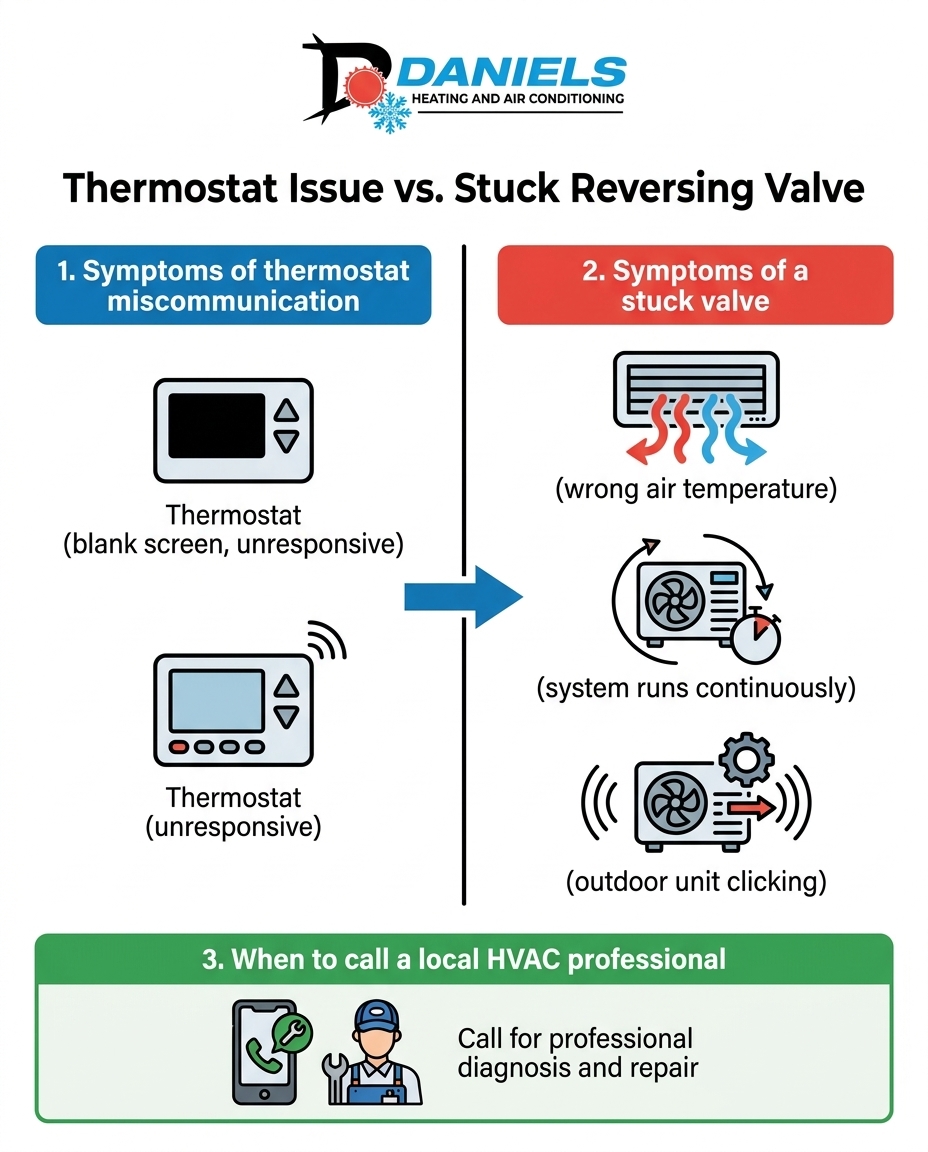
A failing thermostat usually presents digital or electrical symptoms. If the screen is completely blank, the batteries might be dead, or the unit may have lost its low-voltage connection to the air handler. If you press the buttons and the screen registers the change but absolutely nothing happens—no fans turn on, no outdoor unit hums—the thermostat is likely failing to send the signal.
When to Suspect the Reversing Valve
A stuck reversing valve presents mechanical symptoms. The most obvious sign is that the system responds to the thermostat, the indoor fan blows, and the outdoor unit turns on—but the air coming out of the vents is the wrong temperature. You might also hear a distinct, repetitive clicking or a loud "whoosh" sound from the outdoor unit as the solenoid tries and fails to push the internal slide.
The quick check: Go to your thermostat and switch the system to "Emergency Heat" or "Auxiliary Heat." This bypasses the heat pump entirely and uses electric heat strips. If the vents suddenly blow hot air, your thermostat is communicating perfectly, and the heat pump's reversing valve is the likely culprit. For a complete list of safe, DIY diagnostic steps, review a trusted HVAC troubleshooting checklist before making a service call.
Why Diagnostics Require a Licensed Professional
While it is tempting to try and fix a heating issue yourself, diagnosing a reversing valve is not a DIY project. The process requires interacting with high-voltage electricity and pressurized, highly regulated chemicals. This is why residents in Farmhill and the surrounding areas rely on our licensed team at Daniels Heating And Air Conditioning to handle the heavy lifting.
High-Voltage and Pressure Testing
To determine if the reversing valve has failed, a technician must first check the electrical side. This involves using a multimeter to verify that the solenoid coil is receiving the correct 24-volt signal from the defrost board, and checking the resistance (ohms) of the coil itself to ensure it hasn't shorted out.
If the electrical components are sound, the technician must then check the mechanical side. This requires attaching specialized gauges to the system's service ports to read the refrigerant pressures. A reversing valve that is stuck halfway will cause the high-pressure and low-pressure sides of the system to equalize, creating a specific gauge reading that only a trained eye can interpret.
Regulatory and Safety Compliance
Handling refrigerants requires strict adherence to EPA Section 608 regulations. Venting refrigerant into the atmosphere is illegal, and replacing a reversing valve requires recovering the existing refrigerant, unbrazing the old brass valve with an oxy-acetylene torch, brazing in the new valve while protecting it from heat damage, and pulling a deep vacuum on the system before recharging it.
One local customer who has relied on our team for general HVAC service over the past three years noted the consistency, professionalism, and deep knowledge our technicians bring to these exact types of complex calls. When dealing with specialized diagnostics, having experienced Goldsboro heating experts on your side ensures the problem is identified accurately and resolved safely.
Proactive Fall Preparation: Stopping Valve Failures Before They Start
The best way to handle a stuck reversing valve is to prevent it from sticking in the first place. The extreme September morning-to-afternoon temperature swings are inevitable, but a system breakdown is not. Transitioning your home from summer cooling to winter heating should begin weeks before the first real freeze hits.
The Power of Pre-Season Maintenance
During a routine twice-yearly check-up for a maintenance agreement, our technicians go beyond simply changing the filter. We actively test the system's ability to shift modes. By forcing the heat pump into heating mode during a controlled fall tune-up, the technician can listen to the reversing valve, measure the temperature differential, and ensure the internal slide is moving freely after its long summer dormancy. If the valve is showing signs of sticking, it can be addressed immediately, rather than waiting for it to fail on a cold Sunday morning.
What a Comprehensive Fall Inspection Includes
Looking at our own dispatch logs at Daniels Heating and Air Conditioning, reversing valve issues consistently rank as a top diagnostic trend in early fall. Because of this community-specific data, checking the reversing valve first has become our proactive diagnostic standard. A thorough fall inspection also includes:
• Coil cleaning: Removing summer dust and debris from the outdoor coil to ensure optimal heat transfer.
• Electrical tightening: Checking contactors, capacitors, and wire connections that may have vibrated loose during heavy summer use.
• Defrost board testing: Ensuring the system can successfully melt away winter frost when temperatures drop below freezing.
Homeowners who invest in a comprehensive preventative maintenance plan enjoy lower energy bills, fewer surprise breakdowns, and total peace of mind as the seasons change.
Frequently Asked Questions About Fall Heat Pump Transitions
Why does my heat pump blow cold air when I turn the heat on?
If your system blows cold air in heating mode, the reversing valve is likely stuck in the cooling position. This happens frequently in Farmhill during early fall when the system is asked to switch modes after sitting dormant all summer. The internal slide mechanism fails to shift, trapping the system in air conditioning mode.
How can you tell if a reversing valve is stuck vs a thermostat issue?
You can isolate the issue by testing the emergency heat setting. If you switch to emergency heat and hot air comes out of the vents, your thermostat is communicating properly, pointing to a mechanical failure at the reversing valve. If the screen is blank or the system doesn't respond at all, it is usually a thermostat problem.
Can a heat pump reversing valve get stuck?
Yes, reversing valves can and do get stuck. The internal slide relies on precise refrigerant pressure and lubrication to move back and forth. Long periods of inactivity, electrical solenoid failures, or internal physical damage can cause the valve to bind and fail to shift.
What are the symptoms of a bad heat pump reversing valve?
The most common symptom is a system that runs continuously but delivers the wrong air temperature. You may also notice a lack of a "whoosh" sound when the system tries to switch modes, loud clicking noises from the outdoor unit, or higher-than-normal energy bills as the system struggles to condition the air.
How do Farmhill's fall temperature swings affect my heat pump's lifespan?
The rapid shift from cool mornings to hot afternoons forces the heat pump to cycle on and off frequently while switching between heating and cooling modes. This constant thermal expansion, contraction, and mechanical shifting accelerates wear and tear on components like the reversing valve and compressor.
Should I test my heat pump's heating mode before September ends?
Absolutely. Testing your heating mode on a mild day in early fall allows you to verify that the reversing valve operates smoothly before you actually need the heat. If you discover an issue, you can schedule a professional repair without the urgency of a freezing house.
Secure Your Comfort Before the Real Cold Hits
The unpredictable September morning-to-afternoon temperature swings will put your heat pump to the test, but you don't have to wait for a chilly morning to find out if your system is ready. Addressing minor mechanical hesitation early prevents major breakdowns later. Schedule your professional fall inspection today to ensure your reversing valve is operating flawlessly, giving you total peace of mind before the real winter weather arrives.
hear what our satisfied
clients have to say


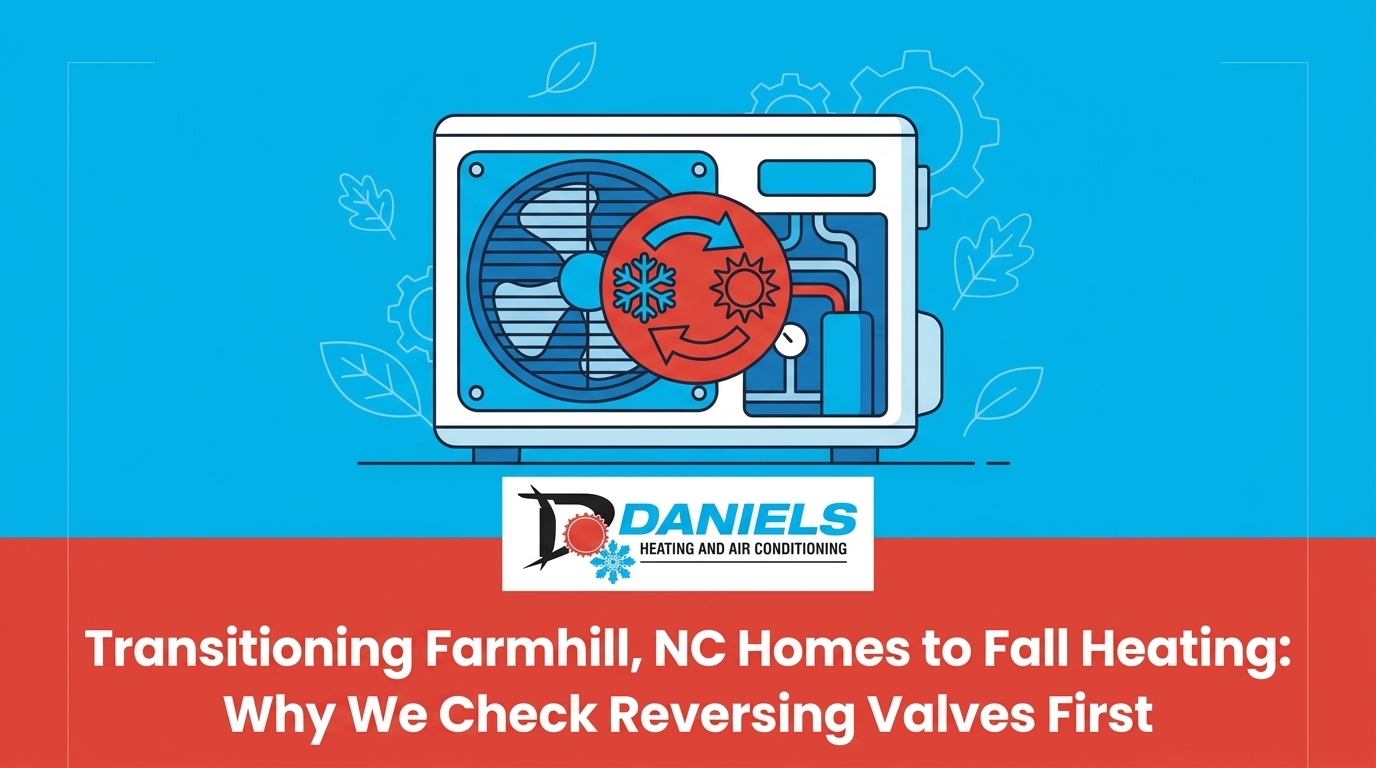
Service areas